
Wallpaper Removal for a Fresh Start on Your Walls
Wallpaper can be a beautiful choice, but when it is time for a change, the removal process matters as much as the new color. Different papers and adhesives behave differently, especially on older walls. For this project, the priority is wall coverings, adhesive, and the surface beneath.
Wall Coverings and Underlying Surfaces
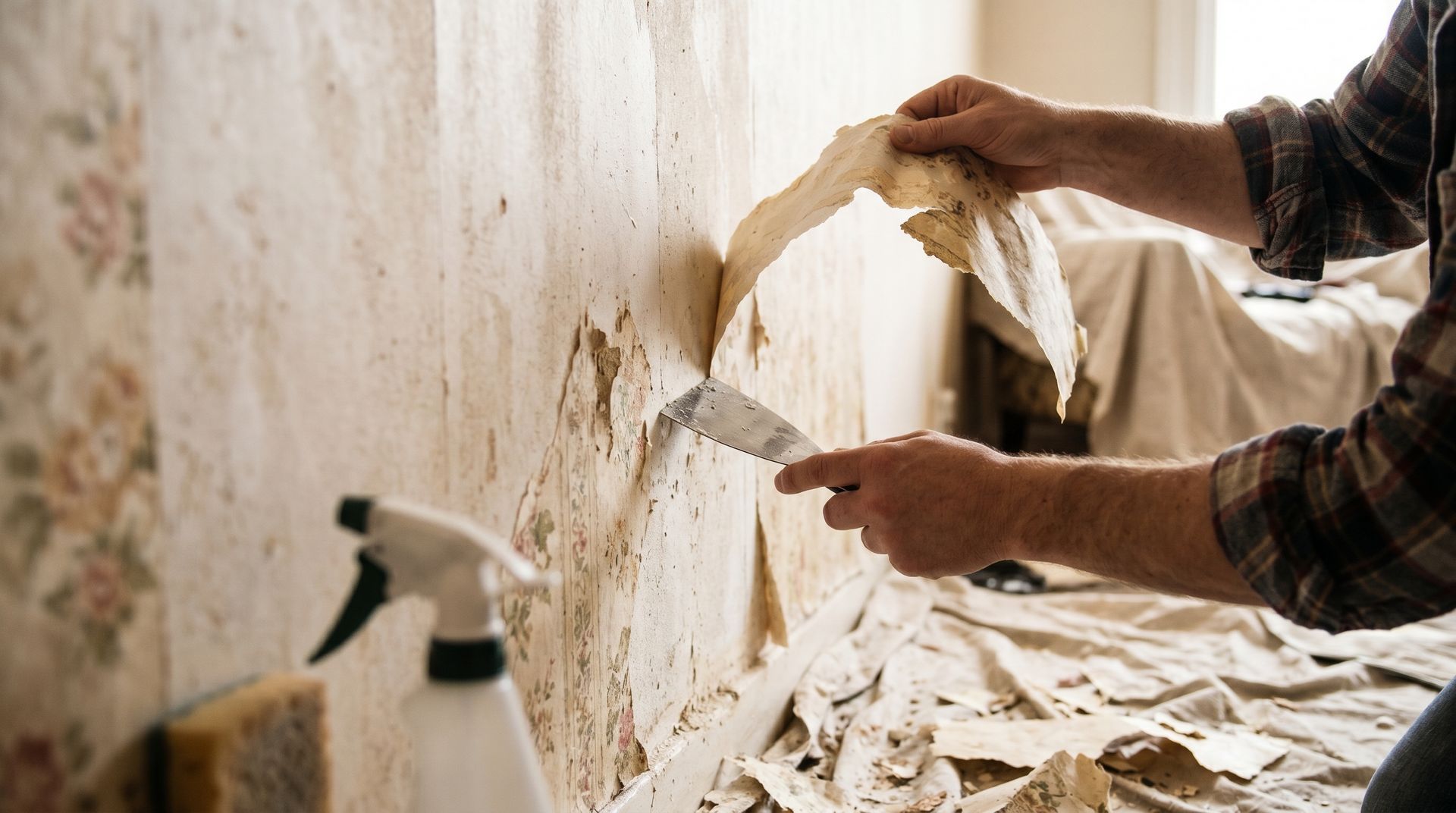
Tell us whether the covering is peeling, layered, painted over, or firmly attached. A small loose corner does not always show how the rest of the wall will respond. For example, tell us whether the covering is peeling, layered, painted over, or firmly attached.
The surface beneath wallpaper may have adhesive residue, torn drywall paper, or patches from earlier work. Those conditions can affect the preparation needed before painting.
Room-by-Room Color Planning
01
If you know when the wallpaper was installed or whether there are several layers, share that information. It can help frame a realistic discussion about what the wall may need.
02
A feature wall in a bedroom is a different project from wallpaper covering a stairwell or several connected rooms. Access and the amount of material are part of the picture.
03
After wallpaper comes off, adhesive residue and wall damage may affect the next finish. Mention whether you hope to paint the wall or install another covering.
04
A loose corner does not tell you how easily the rest of the wallpaper will come away. Painted-over paper and multiple layers can be especially different.

Planning Your Wallpaper Stripping & Removal Project
Identify which rooms have wallpaper and whether the covering is paper, vinyl, or an unknown material. Look for lifting seams, multiple layers, and sections near outlets or windows. What lies beneath the covering can influence the condition of the wall after removal, so avoid assuming the surface will be ready for paint immediately. Wallpaper can hide uneven patches, seams, or damaged wallboard. The visible pattern is only part of the project; the condition of the wall underneath can influence the next finish.
Before asking for an estimate, separate full-room painting from individual accents and touch-ups. Note any furniture-heavy spaces, tall walls, or rooms you need to keep using. Mention visible nail holes or previous patches. These details make the conversation about your actual home rather than a one-size-fits-all paint job.
For a multiroom project, think about where one color stops and the next begins. Open doorways, stairwells, and adjoining hallways can make an abrupt transition more noticeable. If you plan to keep some rooms unchanged, note those existing colors when describing the project. It also helps to separate walls from ceilings, trim, and doors in your room list. This gives the estimate conversation a clear scope rather than assuming that every surface in each room needs the same treatment.
What May Be Beneath the Wallpaper
Wallpaper can be attached to very different wall surfaces, and the condition underneath is not always visible until the covering comes off. Seams, layers of old paper, painted-over wallpaper, and adhesive residue can all affect what needs to be evaluated.
When asking about removal, tell us how many rooms are involved and whether the paper covers an entire wall or a small feature area. If you know the wall was previously damaged or repaired, mention it. Decide whether your goal is a paint-ready wall or simply removal of the existing covering so the scope is clear.
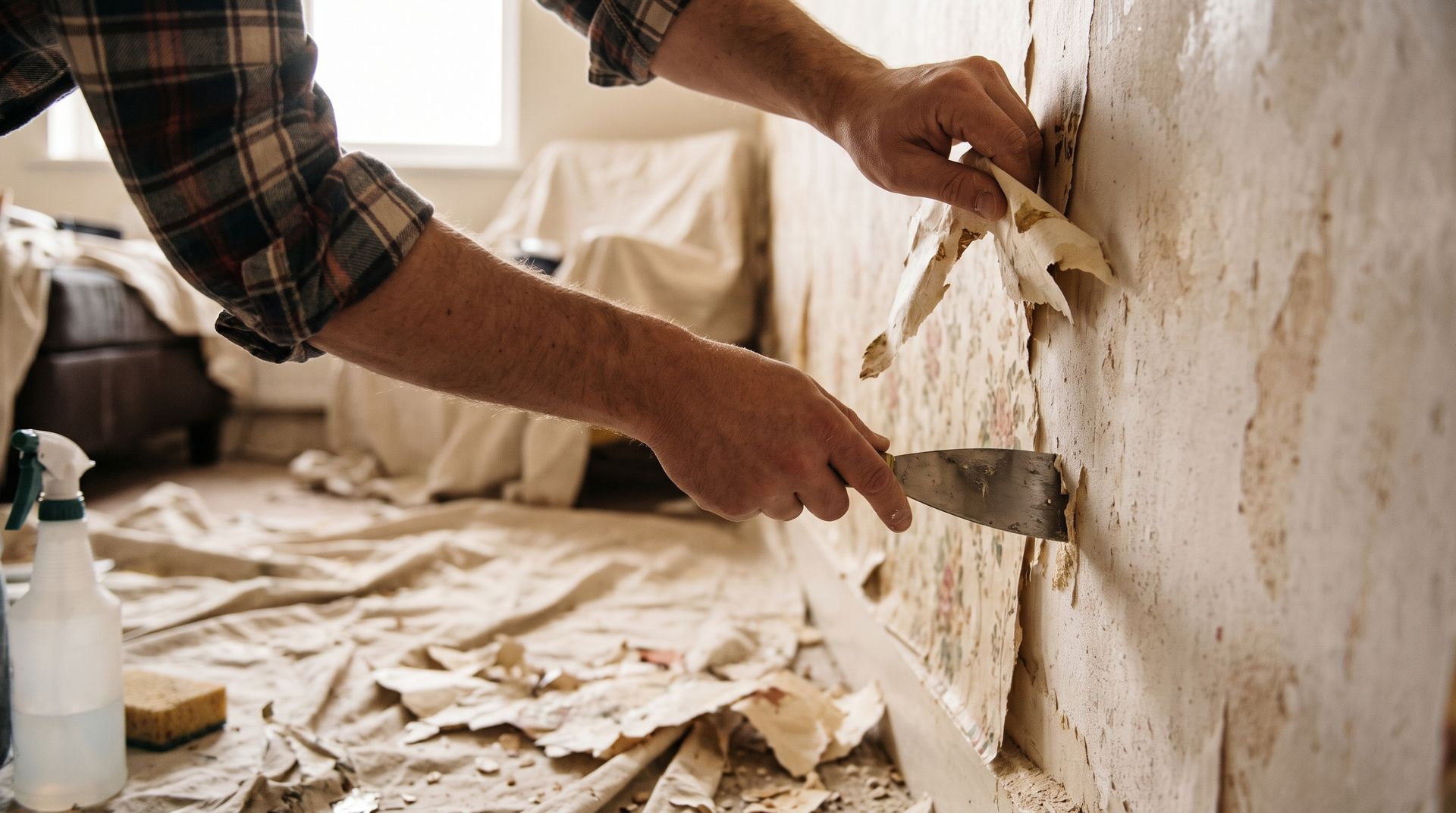
Wallpaper removal can reveal conditions that were not visible while the covering was in place. Older adhesive, torn drywall paper, and uneven patches may affect how the wall looks afterward. Note whether the covering is paper, vinyl-like, or another material if you know, and whether seams have started lifting. If you plan to paint the room afterward, describe the finish you hope to achieve. This separates the removal discussion from the preparation that a new wall finish may require.

Discuss Removing Your Wallpaper
If wallpaper covers several rooms, explain which areas have loose seams, stubborn adhesive, or visible layers. The condition beneath the paper matters for a future painted finish. Describe the rooms, the wallpaper condition, and what finish you would like on the walls afterward.